11.02.2026 to 11.02.2026 - monochrom, MQ Showrooms
Opening: Ursula Maria Probst & Raashish India: PEACE STARTS WITH A SMILE
FREE ENTRY, ART, FILM & DIGITAL CULTURE
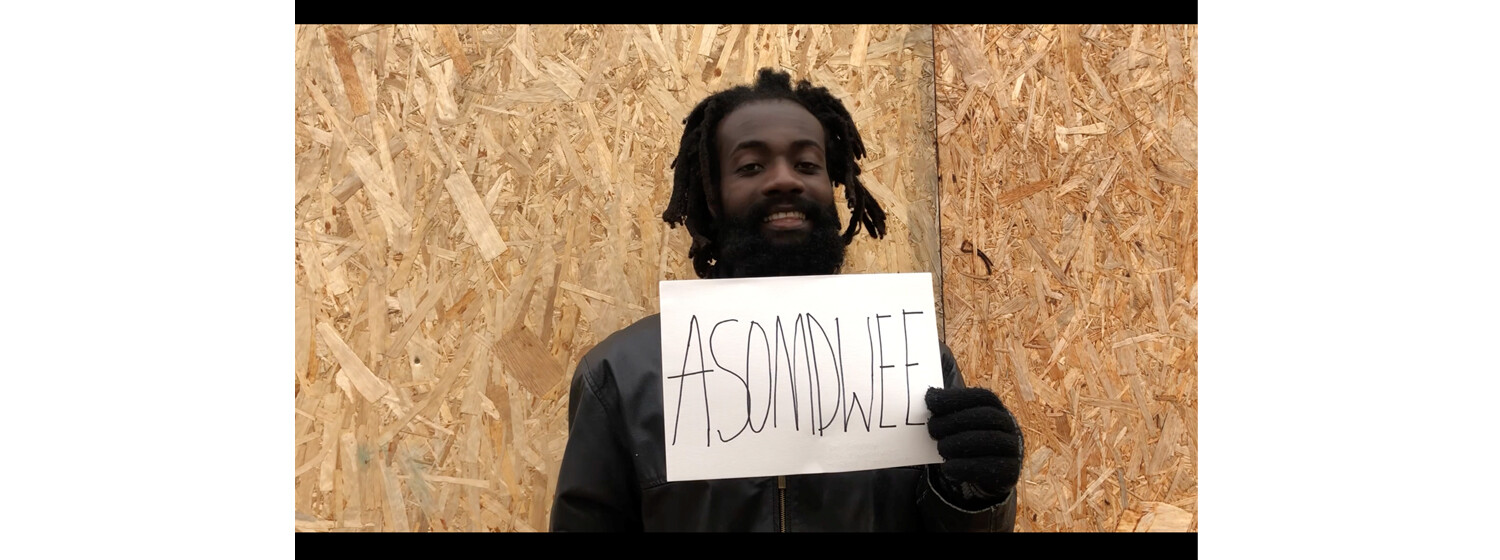
artVideoLoop:
Ursula Maria Probst & Raashish India
PEACE STARTS WITH A SMILE
monochrom| MQ Schauräume l free admission
Opening Wed 11.02.2026, 18h – the following openings will take place on the same evening in other MQ Showrooms and at the eSeL reception, as well as in MQ Raum D:
MQ Artist-in-Residence Selbi Jumayeva l Steppe Synanthropies: Data Tapestry
MQ Artist-in-Residence Edwin Adokwei Boye: After Fashion, Life!
Martin Markeli: Open Atelier – Back from Miami candy
eSeL: Gerngeschehen MQ
MQ Artist-in-Residence Ausstellung: Artistic Gathering
“Smash capitalism, make world peace.” (Adhil Kumar, Studentin, Kochi, Indien)
„Do you know that we are all affected by war? Even wether we are directly involved or not, wether we want to be or not. Even if we leave far away from the war on the other side of the world. We are still connected with it. War works like the butterflyeffect. Yes butterflyeffect. A decision made in one country shakes market in another. A bomb tropped in one city raises food prices in distant villages. Rising prices, inflitation, it moves to all of us.” (Kiriti Soha, artist, Bangladesh)
“MIR does not mean just peace it also means world. For peace to come it really has to all-encompassing. It has to be everywhere in the world.” (Dasha Estfeva, Friedensaktivistin, International University, Wien)
“Peace means that there are no potential dangerous things around.” (Ziliä Qansura, Künstlerin, Baskortostan)
“For me peace is my own state of mind. I experience peace when my mind and my heart are in peace and in harmony with myself. It naturally brings peace to my surroundings, to my children, to my neighbours even to streetdogs and streetcats. (Reiko Shimizu, Künstlerin, Japan/Brasilien/Indien)
“Peace is the time between happiness and sadness. The balance between is peace. Too much happiness disrupts our peace.” (Tithi Moni Halder, Künstlerin, Bangladesh)
One million children from 5,000 schools will meditate at Wat Phra Dhammakya in Thailand in early 2026 for world peace. Shocked by the escalating violence and brutality, with genocide and mass atrocities currently being committed, the video project PEACE STARTS WITH A SMILE raises the question of peace on political, ecological, and personal levels. Voices from diverse cultures, needs, and habits are brought together in the video PEACE STARTS WITH A SMILE, initiated by Ursula Maria Probst & Raashish India. Is there a canon of peace in a world where imbalance is growing?
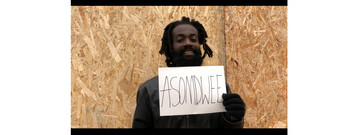
Participants write the word “peace” in their mother tongue and its script on a sheet of paper. In their statements, they reflect on their personal approach to peace in different ways—ranging from their daily engagement in peace-promoting practices and hopes, to political agendas, ecological tensions, and acts of resistance. We face complex socio-political challenges, including the emergence of new political realities. How can the persistent lack of a politics of peace be countered in the ongoing business of war?
The video PEACE STARTS WITH A SMILE by Ursula Maria Probst & Raashish India is part of a project that attempts to bring the appeal for “peace” (a state to which we all long) together in as many languages of the world as possible. The concept for the video is based on intensive personal conversations and/or written and oral exchanges with international artists and cultural workers via social media, who are committed to peace and have themselves realized artistic peace projects—such as the Kashmiri artist Inda Salim, who collaborated with Laura Martin in the installation Peace Game (2004) in Delhi.
As a result, Probst and India asked artists and cultural workers to write “peace” in their mother tongue on a sheet of paper, photograph it and send it to them, or hold the sheet by hand in front of the camera. Some artists sent recordings of “peace” in their mother tongue and video performances. Others were met personally during their travels through India, Sri Lanka, Taiwan, Bangladesh, Nepal, Singapore, Australia, and Thailand. In Vienna, the project was extended into the real public space: young people and adults were asked directly in public squares or in the subway what “peace” means in their mother tongue, to write it on a sheet of paper, and to be recorded on video.
This led to interesting conversations. For example, one reaction was: “Oh, I need to think about that; we never use this word.” In Mandarin, there are different terms for peace, such as anning, ping’an, or heping. “Mir” means peace in many Slavic languages but also “world.” Probst and India were particularly made aware that in Ukrainian, the pronunciation changes and the emphasis is on the “e.” In Bosnian, “mir” also stands for silence and calm and plays an important role in grief work.
For Probst and India, it is important that participants of the project write “peace” in their mother tongue and in their own handwriting, giving it a signature character. In a world increasingly dominated by English as a communication language, which shapes our vocabulary, they find it essential to make the diversity of different languages visible. In the face of growing militarization in language and politics, it also seems necessary to encourage a culture of peace, countering the billion-dollar war economy and increasing global armament.
A brief excursus on the genesis of “PEACE” and its derivation from SHALOM – SALAAM:
The term “PEACE” is derived from the Anglo-French pes and the Old French pais, meaning “peace, reconciliation, calm, agreement” (11th century). The Anglo-French term pes itself comes from the Latin pax, meaning “peace, treaty, agreement, peace treaty, rest, absence of hostility, harmony.” The English word PEACE came into use around 1300 in various personal greetings as a translation of the Hebrew word shalom, which, according to Jewish theology, derives from a Hebrew verb meaning “to be complete, whole.” Although “PEACE” is the common translation, it is incomplete, since shalom, also related to the Arabic salaam, carries multiple meanings beyond peace, including justice, good health, safety, well-being, prosperity, equality, happiness, and kindness, as well as the simple greetings “hello” and “goodbye.”
With:
KWEKU OKOKROKO twi language ghana
ZILIÄ QANSURA baschkir baskortostan
DASHA ESTFEVA russian
DAVID BLUM austrian
PASCHA KOJAN russian
EMRAN SOHAL bengali bangladesh
CRISTIAN MESA spanish columbia
JEROME malayalam kerala india
REIKO SHIMIZU japanes
TITHI MONI HALDER bengali bangladesh
ADHIL KUMARS malayalam kerala india
ALI kurdish
EKATERINA SHAPIRO OBERMAIR jewish russian
MOHAMMAD palestinian
ISABEL LEWIS spanish domenican republic
ATTILA ZANIN hungary
MOBINA farsi
JOSEPH MANUEL filipino
OKSANA LEMISHKA ukrainian
ISABEL LEWIS american
BAYNES TEMESGEN MARYE hadery/amharsch/tigrga/ormo ethiopia
SIMON COUVREUR french
LAMINE CAMARA soussy guinea
AHMET M’BAYE wolof senegal
LALE turkish
MAIKO TAKAHASHI japenese
KARINE LA BEL haitian creole
SIMA ALKOK & MARIAM AL-ZAMILIMOV iraqi syrian arabic
SHUEN taiwanese
MARIANA VAZQUEZ Venezuela spanish
MONICA romanian
NIKLAS austrian
KRISTAPS KLEINBERGS latvian
JEREMY jamaican
MZAMO NONDLWANA zulu/xhosa southafrica
THAMI MAJELA se sotho southafrica
GATO DE SALTO portuguese brazil
JANANI CORRAY sinhala sri lanka
QING CAI mandarin
TAHMINA HAVIZ LISA bangla
AYE KO burmase
JIANAN QU mandarin
URSULA MARIA PROBST austrian
REBECCA RADO serbian
ALDO GIANOTTI italian
DASUKE TAKEYA jabenese
ELVEDIN KLACAR bosnian
GAIO YA mandarin
MIRAY SHINAN israeli
NANZI MEECHUMNA thai
PULAK K. SARKAR bangla
TARIQ BAHIR urdu
UMESHI RAJEENDRA tamil
ASIJA & JANNA FETAHOVIC russia
INES deutsch
INDER SALIM hindi + persian
STELLA CHIANG mandarin
PRAMILA LAMA nepali
VOIN VOINOV bulgarian
ZUHAL farsi afghanistan
AISWARYA SAJINI bengali
KIRITI SAHA bengali Bangladesh
Raashish India, alias Ashish Ratore, is a multidisciplinary artist from Rajasthan, India. As a teenager, he was diagnosed with schizophrenia and obsessive-compulsive disorder. He uses art as a remedy and firmly believes that art aids mental healing. His research focuses on behavioural art, closeness to nature, and political, social and communicative distance. He has participated in art festivals and residencies and organised workshops in schools and universities in India and abroad.
Ursula Maria Probst: Cultural worker, performer, artistic director for contemporary art FLUCC. Centre for Arts and Communities, curator, art critic, lecturer, art historian, urban researcher focusing on gender, biodiversity, the healing power of art and community projects. Since 2018, AIR and research project BODY EMBEDDING with Hongwei Duan with performances in Myanmar, Indonesia, Bangladesh, Mexico, Thailand, Vietnam, Nepal, China, Sri Lanka, Malaysia, India. Since 2017, Transcultural Emancipation. Performances & projects in Brazil, Panama, Cuba, Chile, Argentina, Guatemala, Peru, Colombia, Ukraine, Bulgaria, Germany, USA, Russia, China. Art critic (Kunstforum International, Spike, dérive), curator (KulturKontakt Austria, BKA, Vienna Artweek, Kulturdrogerie, Galerie Krinzinger, K/haus, Kunstraum NÖ, public art Niederösterreich, KÖR). 2026 Crossing Latitudes Singapore, NOBODY IS FREE UNTIL EVERYBODY IS FREE, Kochi/India. TIOFFSP, Britto Arts Trust, Dhaka, Bangladesh. 2025 CRACK ART CAMP BANGLADESH. Kathmandu International Performance and Art Festival. 2024 Participation in ASIATOPIA, Bangkok; CRACK Art Camp, Bangladesh, Baguashan Power Art Festival X, Taiwan, Bahavorial Art Festival, India, BODY EMBEDDING Beijing; Don't talk about us without us, MQ, Summerstage, Vienna; Get Care Now, KÖR, New York; Care on Earth. Who is the fog, who is involved, who cares about it?, Ecologies of Work. Flucc Vienna. 2023/24 SUPER NATUR, Art in Public Space Lower Austria, 2023 In Search of the Urban Alter Ego, KÖR; The Future Begins Today, Festival of Regions; Participation in the ASIATOPIA performance festival. 2013–2019 Transcultural emancipation with artists in residence from KulturKontakt Austria/BKA, 2018 Artist in residence project Q21, frei_raum MQ Wien