In Touch | 17.11.
International Conference Fostering Free Arts
The international conference “In Touch” will take place at MuseumsQuartier Wien on 16 and 17 November. The conference provides an international platform for the exchange of ideas, strategies and experiences among organizations and initiatives that focus on establishing contact with and supporting independent artists from countries where censorship and control of electronic communication channels prevail.
In most cases, the risk of repression against artists goes hand in hand with a decline in international dialogue-based exchange and artistic mobility projects, as well as increasing travel restrictions. This leads to alienation, ignorance, and a dwindling of personal contacts, which in turn plays into the hands of stereotypes and political propaganda.
In contrast, initiatives by individuals, associations, and institutions – which consider it important to facilitate intellectual and artistic exchange between independent artists and intellectuals, based on civil society engagement, while remaining above all political conflicts and ideological divides – are working to counter this trend.
What we want to achieve
How can connections be maintained, how can trust be built and new connections established, and how can formats for exchange and personal encounters be found that work – without compromising politically and without putting artists at risk?
The conference aims to bring together people and initiatives from various countries that have created models that have achieved and continue to achieve precisely this.
Program
10:00 – 11:30: Lectures, presenations and panel discussion:
Artstic Islands of not only cultural survival but perspectives for creative dynamics
This session explores three extraordinary projects by telling the stories of its creators. The Ballet Russe (founded by Sergei Diaghelev) bringing together not only artists escaping from Russia’s collapsing Tsarist empire at the beginning of the 20th century), The Art Museum Nukus (so-called “Louvre in the dessert”) started in the 1950ies by Igor Savitsky bringing together one of the worldwide most important collections of Avantgarde art and making a save haven for art and artists and at the same time a local hotspot of artistic creation that would shine far beyond creativity the remote region of Karakalpakistan. In present days the festival “Kirill & Friends” founded by Kirill Serebrennikov in Berlin in 2026 brings together artists from all around the world, and among them many in emigration (as the founder himself) in order to once again in history shake artistic talents up where they might have lost grounds, bringing together talent in order to create the miracle of art.
Speaker:
Marinika Babanazarova, long-term museum Director in Nukus (Louvre in the Desert) expert on Igor Savitski who she personally knew.
Sjeng Scheijen, historian, leading expert and biographer of Sergey Diagelev.
Kirill Serebrennikov, founder of platforma (2011–2014), legendary artistic director of Gogol Theatre Moscow (2012–2021), internationally successful Theater Maker, founder “Kirill & Friends”.
Moderation: Simon Mraz, co-founder ARTMOV
11:30 – 11:45: Coffee break
11:45 – 14:00: Taking It Forward – A Participatory Closing Session
Listen → Exchange → Reflect → Formulate → Take Forward
Moderation: Raghida Alsangawi
Following a World Café approach, the concept is to create smaller, more informal spaces for exchange where participants can reflect on the themes of the forum, bring together different perspectives and gradually build on each other’s ideas. Rather than simply collecting general feedback at the end, the aim is to turn the discussions of the two days into collective knowledge, concrete recommendations and possible next steps. This fits well with the overall purpose of “In Touch”: maintaining connections, building trust, addressing practical barriers to exchange, and thinking about how cultural cooperation can work responsibly across very different contexts.
We build four discussion tables, with approximately 15/20 participants at each:
- Connection & Trust: How do we keep artistic connections alive?
How can trust and artistic exchange be maintained when censorship, political tensions, restricted communication or security concerns make contact difficult? What forms of connection can work without putting artists at risk? - Mobility & Access: What prevents artists from moving, participating and connecting?
What practical barriers do artists face – visas, permits, travel restrictions, funding, digital access and other structural obstacles? What can institutions and cultural networks realistically do about them? - Power, Representation & Reciprocity: How do we make cultural cooperation more reciprocal?
Who gets to decide, who gets represented, and who controls the narrative? How can artists retain agency, dignity and ownership rather than being positioned simply as recipients or representatives of a particular context? - Sustainability, Care & Participation: What makes cultural exchange sustainable?
How can cultural spaces, initiatives and collaborations better support wellbeing, belonging, inclusion, participation and long-term artistic practice, rather than relying on short-term projects or individual resilience?
With estimated 60–80 participants, Raghida will pre-allocate participants into four mixed groups of around 15 people, so that each group includes a variety of artistic, institutional and regional perspectives. They would start at one table and rotate through three different tables.
Each table would have a host who remains there throughout the session. At the beginning of each new round, the host briefly introduces the key points raised by the previous group, so that the conversation accumulates rather than starting again from zero.
Three rounds of approximately 10–15 minutes each, followed by a short synthesis period. At the end, each table would identify the three most important insights and one or two concrete recommendations or possible actions that emerged from the discussions.
Then we bring everyone back together for a collective presentation. Each table would share its key points, and Raghida helps help cluster them into broader themes and recommendations. These could then directly feed into the final documentation/report as concrete outcomes of the forum.
Final exercise: “What will I take away from “In Touch”?”
For the very final exercise, Raghida brings the focus back to the individual: “What will I take away from “In Touch”?”
Each participant writes some thoughts, idea, question or commitment on a sticky note and places it on a shared wall (or using their phone through (Word Cloud/ like attached, which I can plan and organize). This gives us a final collective picture of what participants are taking away from the forum, while ending on a more personal and reflective note.
Information
- Registration for 16 and 17 November here
Security Request:
All participants are asked to ad here to the Chatham House Rule. This means that participants are free to use the information received during the session, but may not disclose the identity or affiliation of the speaker(s) or of other participants. Further we ask all participants not to take photos of panelists or audience.
By participating in this conference, you agree to respect these principles and to contribute to an open and constructive exchange in a confidential setting.
All documents will be compiled by the conference organizer into a final report, which may be published on the websites/communication channels of MuseumsQuartier, Dialogbüro, Artmov and BMWKMS.


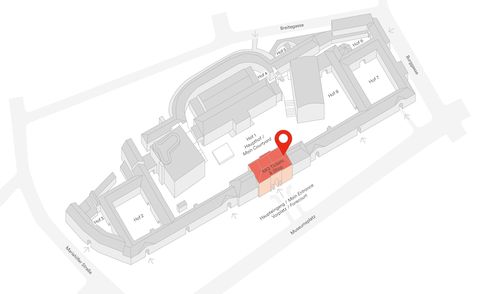
Barocke Suiten