In Touch | 16.11.
International Conference Fostering Free Arts
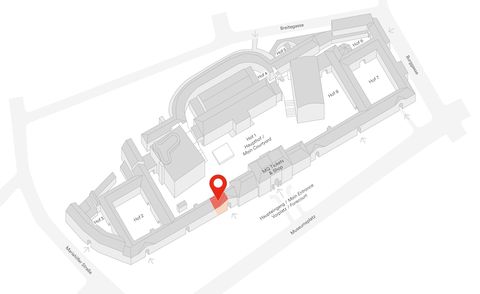
The international conference “In Touch” will take place at MuseumsQuartier Wien on 16 and 17 November. The conference provides an international platform for the exchange of ideas, strategies and experiences among organizations and initiatives that focus on establishing contact with and supporting independent artists from countries where censorship and control of electronic communication channels prevail.
In most cases, the risk of repression against artists goes hand in hand with a decline in international dialogue-based exchange and artistic mobility projects, as well as increasing travel restrictions. This leads to alienation, ignorance, and a dwindling of personal contacts, which in turn plays into the hands of stereotypes and political propaganda.
In contrast, initiatives by individuals, associations, and institutions – which consider it important to facilitate intellectual and artistic exchange between independent artists and intellectuals, based on civil society engagement, while remaining above all political conflictsand ideological divides – are working to counter this trend.
What we want to achieve
How can connections be maintained, how can trust be built and new connections established, and how can formats for exchange and personal encounters be found that work – without compromising politically and without putting artists at risk?
The conference aims to bring together people and initiatives from various countries that have created models that have achieved and continue to achieve precisely this.
Program
09:30 – 10:00 Registration
10:00 – 10:20: Welcome Words
Bettina Leidl, director MuseumsQuartier
TBA., Austrian Federal Ministry of Housing, Arts, Culture, Media, and Sport
Stefan Melle, director Dialog Büro Vienna
10:20 – 11:40: Presentations and panel discussion
Art and Culture contributing to cultural life, education and formation in a community -experiences and perspectives
Even under constant risk, the “Secret Reading Club of Kabul” created a space of trust where women could come together to read, exchange ideas, discuss, learn and support each other.
The founder of the “Secret Reading Club of Kabul”, will be there to speak about creating the club and her experience. Additionally, one the co-directors of the documentary “The Secret Reading Club of Kabul”, will speak about the film and how it was made around the lives and experiences of the women in the club.
As a second remarkable project, Efran Ghiasi, founder of Tehran Art Biennial and co-founderand director of Tehran Summit will present his work.
They will discuss with Marita Mukkonen and Ivor Stodolsky, the two founders and directors of “Artists at Risk”, a worldwide operating program saving artists in urgent situations of threat.
11:40 – 12:00: Coffee break
12:00 – 13:00: Books on Independent Art – different approaches and recent publications on independent Russian Artists
The common ground is the understanding how important it is to give artists a voice, who have little chance to speak for themselves, because of cut-off relations between states, because of being afraid of repression, sometimes even because of being put to prison. Some feel a responsibility to give these artists a floor, show their works, tell their stories. Approaches can be very different. Two very different projects are presented and discussed in this session:
“Artists Against the Kremlin”, a project by Prometheus Art. This project brings together contemporary Russian-speaking artists from across the world whose practices confront the Russian invasion of Ukraine, repression, and censorship. Beyond three exhibitions in Amsterdam, two books are published already. “Breaking Frames, 25 years of independent art from and in Russia”, a book by Simon Mraz, published at Academic Studies Press, 2026. The book tries for the first time to give an overview of independent art from and in Russia. Political art is part of this dive into what tries to tell a part of art history at risk to be lost, but the book wants to catch a broader picture.
Speaker:
Helena Gubina, strategic development manager of the project “Artists against the Kremlin”
Vladimir Shalamov, founder Prometheus-art, curator of the exhibition program
Simon Mraz, art historian, cultural worker in the field of cultural diplomacy, co-founderwww.artmov.org, an initiative fostering artistic dialogue between independent artists from Belarus, Russia and Western countries.
Moderation: Almuth Spiegler, arts and culture editor, Die Presse
13:00 – 14:30: Free lunch break
14:30 – 16:00: Beyond Resilience: Art, Dignity and Cultural Exchange Across Unequal Realities
The session will explore how artists, cultural practitioners, festivals and cultural institutionsin Jordan and the wider Middle East continue to create, gather and speak under conditionsof war, inequality, repression and shrinking freedoms. Jordan provides an important regional context. It has historically offered a space for artists, curators and cultural practitioners from neighbouring countries to meet, work andexchange, particularly during periods of conflict and displacement. At the same time, Jordan has its own social, economic, cultural and governmental limitations and challenges, including questions around freedom of expression, permits and the conditions under which cultural work can take place. Rather than presenting Jordan simply as either a safe haven or a restricted environment, the discussion can explore this tension: how cultural spaces continue to function, create connections and sustain artistic life while operating within their own limitations and realities. Moving beyond the language of resilience and the idea of cultural work assomething to be simply “supported,” the conversation asks a more difficult question: what does responsible cultural cooperation look like when the conditions themselves are unequal? What do accountability, reciprocity and care require in practice; and how can international cultural work become a genuine relationship rather than a one-way act of support? From this regional perspective, the conversation can also touch on lived realities shaped by the wars and crises in Syria, Gaza and the West Bank, Syria, Lebanon and the often less visible war in Yemen; without attempting to represent each context through a separate country perspective.
Speaker:
Lama Hazboun, Founder and Director of the Amman Jazz Festival since 2013 and co-founder of OrangeRed, Jordan's first independent music and cultural event management company.
Linda Khoury, Photographer, cultural activist and Director of Image Festival Amman; founder of “Darat Al Tasweer” (2007), working on representation, displacement, and the rightto tell one's own story.
Hussam Hamo, Syrian filmmaker, musician and composer based in Aleppo, creating from within the realities of war and its aftermath and bringing an intimate artistic perspective on what it means to continue making, imagining and telling stories amid rupture and constraint.
Moderation: Raghida Alsangalawi,curator and cultural diplomacy strategist working at the intersection of art, politics and international relations; managing Communication and Cultural Affairs at the Austrian Embassy in Amman, Vice-President of EUNIC Jordan, and certified trauma-informed trainer.
16:00 – 16:30: Coffee break
16:30 – 17:30: Learning about two examplary projects: “Haven for Artists” & the “Queer Muslim Project”
“Haven for Artists” is a cultural feminist organisation founded by artist and activist Dayna Ashin Beirut in 2011. Working at the intersection of art and activism, Haven creates spaces for artistic expression, collaboration, and community, with a particular focus on feminist, queer and decolonial practices. Through exhibitions, residencies, workshops, discussions and advocacy, it supports artists and communities in developing alternative, more inclusive cultural structures.
The “Queer Muslim Project”, founded in 2017 by Rafiul Alom Rahman, is a pioneering cultural and digital platform creating space for queer Muslims and other underrepresented LGBTQIA+ voices to tell their own stories. Rooted in South Asia and reaching a global community of more than 70,000 people, the project uses storytelling, art, media and cultural production to challenge stereotypes around both queerness and Islam, while fostering belonging, visibility and solidarity. Through artist programmes, residencies, workshops, community gatherings and international collaborations, it supports emerging queer artists and storytellers and works towards lasting cultural and narrative change. Its importance lies not only in making queer Muslim lives visible, but in creating new possibilities for how faith, sexuality, identity and community can be understood and represented.
Speaker:
Dayna Ash is an intersectional feminist, performing artist, writer, and the founder & Executive Director of “Haven for Artists”, a cultural feminist organization working at the intersection of art and activism. Dayna was named one of the BBC's 100 most inspirational Women in 2019, awarded the “Woman of Distinction” award in 2020 by the NGO Committee on the Status of Women, and the “Leader in LGBT Health Equity Award” from the Lebanese Medical Association for Sexual Health in 2021 for advancing LGBTQ wellbeing in Lebanon.
Rafiul Alom Rahman is the Founder and Director of “The Queer Muslim Project“, where he spearheads the “Queer Frames Screenwriting Lab”, South Asia’s pioneering development lab for emerging and early career queer filmmakers.
Maniza Khalid leads Programs and Innovations at “The Queer Muslim Project“. A Swedish Institute Leader Lab fellow and former advisor to queer philanthropic organisations including “Astraea Lesbian Foundation for Justice“, they have also been part of leadership networks including the Asia Feminist LBQ Network.
Moderation: Eva Konzett, Der Falter
17:30 – 18:30: Needs and Challenges in Old an New Homes
In this session is a conversation between a brother and a sister, Tahora and Sayed Jalil Hussaini and the artist, curator and cultural researcher Asma Aiad. Sayed Jalil with his film created specially for our conference (10-15 min.) will give voice to artists in Afghanistan giving us an idea of what artists could need from art communities outside the country. And Sayed Jalil gives an insight of practical lessons life in emigration. From the perspective of Vienna, Asma Aiad will expand the conversation by asking what solidarity with artists abroad means when artists and communities from these same regions are already part of European societies. Drawing on her artistic, curatorial and research practice, she will address questions of belonging, representation and participation, and the conditions under which artists are able to move from being perceived as guests or representatives of a “community” towards becoming equal participants in the cultural landscape.
Speaker:
Tahora Hussaini is a passionate documentary photographer and storyteller based in Berlin, focused on culture, people, and social injustice within the Afghan diaspora. She has held two photo exhibitions of her own work about discrimination and racism in east Germany and Afghan woman before Taliban, and organized a third by an Afghan artist on daily life in Afghanistan. Her interest in visual storytelling grew alongside years of direct work with migrant and refugee communities. She holds a Master's in Public Policy.
Sayed Jalil Hussaini is an Afghan filmmaker based in Denmark. He worked for many years in television and video production in Kabul, at Ariana TV, 1TV, Tolo TV and Awaz Production. His short film “Darya's Dream” won Best Fiction Film and Best Screenplay at the 2nd Herat International Women's Film Festival in 2014, and his work has won four awards in Afghanistan. He also made the short film Devious. In Denmark, he continues to work in film alongside a part-time job, collaborating with other filmmakers on short documentaries and short films, mostly behind the camera and in editing.
Asma Aiad is a Vienna-based artist, curator and cultural researcher. Her work explores questions of representation, belonging and participation, with a particular focus on Muslim perspectives and their position within Austrian art and cultural institutions. She is currently pursuing a PhD in Cultural Studies at the Academy of Fine Arts Vienna, researching the representation and artistic participation of Muslims in Austria. As co-founder of Salam Oida and initiator and curator of Muslim*Contemporary, she develops artistic and curatorial formats that create spaces for self-representation and participation beyond stereotypical narratives.
Moderation: Simone Brunner, Die Zeit
18:30 – 19:00: Präsentation
arise.space is a digital platform for creating virtual statements in specific urban locations through augmented reality, by passing mechanisms of censorship. It also brings back street artworks erased by the authorities, reconstructing them where they originally appeared.
Format: A video screening about the platform, after which the audience can ask the platform’s creator questions. To preserve their anonymity, the speaker will take part remotely via Zoom using an avatar.
Information
- Registration for 16 and 17 November here
Security Request
All participants are asked to ad here to the Chatham House Rule. This means that participants are free to use the information received during the session, but may not disclose the identity or affiliation of the speaker(s) or of other participants.
Further we ask all participants not to take photos of panelists or audience. By participating in this conference, you agree to respect these principles and to contribute to an open and constructive exchange in a confidential setting.
All documents will be compiled by the conference organizer into a final report, which maybe published on the websites/communication channels of MuseumsQuartier, Dialogbüro, Artmov and BMWKMS.


Arena21