Openness is often seen as a simple principle: make knowledge, data and software freely available, and the world will be a fairer place. But the reality is more complex. Openness is contested, co-opted and, if not carefully designed, can even reinforce existing power structures. The handbook ‘The ABC of Openness’ addresses precisely this challenge: it shows how open knowledge cultures can actually contribute to greater participation and justice.
The panel discussion brings together four of the handbook’s authors to discuss the key issues of our time: How can openness become a tool for greater justice? How can we create digital commons that truly benefit everyone? And what role do projects such as Wikipedia, Wikidata, Mastodon and open educational resources (OER) play in this?
The panellists are recognised experts in their respective fields. Together, they explore the various facets of openness:
The power of the community and the importance of projects such as Wikipedia and its sister projects for the preservation and maintenance of free knowledge. The concept of openness from the perspective of art, culture and education, and how technological literacy can be taught in a democratic manner. The potential of Open Educational Resources for inclusive and equitable education, and how teaching materials can be designed to be accessible and reusable.
The central question is: How can openness effectively protect against the concentration of power and enable genuine participation? The panellists will discuss the necessary conditions, such as transparent governance, fair licensing models (e.g. Creative Commons), sustainable infrastructure and the protection of sensitive data. They will highlight why openness is a mission that goes beyond technical issues and requires a societal mindset.
The event is aimed at anyone with an interest in the future of our digital society, whether from the public sector, education, the arts, academia or civil society. We look forward to an evening of thought-provoking ideas and critical perspectives on how we can shape our digital commons with care, responsibility and a commitment to justice. Event is held only in German.
Panellists
Sonja Fischbauer is Chair of Wikimedia Austria and works as an organisational developer and strategist at the intersection of technology and society. She spent eight years in senior roles at the Open Knowledge Foundation Germany, Jugend hackt and Code for Germany. She volunteers with the Wikiverse, Code for All and the Taiwanese civic tech network g0v.
Magdalena Reiter works as a freelancer at the intersection of digital culture, technology, art, culture and education, and is Deputy Chair of Wikimedia Austria. She develops initiatives designed primarily to empower marginalised people to critically reflect on technology and play an active role in shaping it. She sees education as a key lever not only for using digital infrastructures, but also for helping to shape them democratically.
Melanie Bartos is a science communicator at the University of Innsbruck. Her work focuses on the development of multimedia formats such as podcasts and, more generally, on online and social media communication. In terms of content, she focuses primarily on climate and transformation issues. A commitment to non-profit and data-protection-friendly approaches characterises all areas of her work. She is Chair of the Board of FREIRAD, Freies Radio Innsbruck, and a board member of Wikimedia Austria.
Moderation
Claudia Garád is President of Wikimedia Europe and Managing Director of Wikimedia Austria. In this role, she has been supporting the people behind Wikipedia since 2012, promoting their ideas and working to foster greater diversity and inclusivity within the Wikimedia community. Garád also serves on the advisory boards of the Cultural Broadcasting Archives (CBA) and Open Knowledge Maps.
MQ Summer Stage
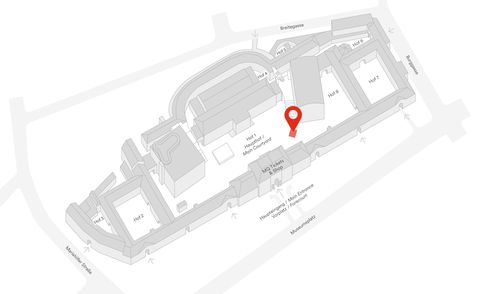
MQ Main Courtyard