25 Years of MQ — 33 Years of Az W
Cultural Districts in Transformation
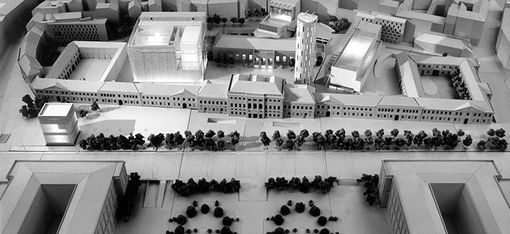
The MuseumsQuartier was an international trailblazer, and the Az W was one of the local pioneers. How do currently emerging cultural districts compare to these? What are the emerging issues?
For a quarter of a century, the MuseumsQuartier Wien has been one of the largest cultural districts in Europe. To mark the 25th anniversary of the MuseumsQuartier, the Architekturzentrum Wien is exploring current perspectives in architecture and landscape architecture, and discussing the transformative potential of cultural districts. What remains, and what should be reconceived?
Two keynote presentations showcase international projects ranging from the renovation of existing structures to the design of open spaces: Vylder Vinck, in collaboration with AgwA, is transforming the Messepalast in Charleroi into a multifaceted, public urban landscape. Atelier le balto advocates a process-oriented and open approach to landscape architecture, and has established itself with garden installations at renowned cultural institutions, such as the Palais de Tokyo in Paris or, most recently, the Berlinische Galerie.
Keynote speakers
Jan de Vylder, architecten jan de vylder inge vinck
Véronique Faucheur, MarcPouzol, atelier le balto
Discussion
Dieter Bogner, museum planner
Bettina Leidl, director MuseumsQuartier Wien
Katharina Ritter, curator, Az W
Hannes Swoboda, Former City Councillor for Urban Development and Planning
Moderated by
Anna Soucek, radio journalist
In English
Followed by the Az W Summer Party
Inquiries
Lene Benz
+43-1-522 31 15-17
benz@azw.at
Architekturzentrum Wien