Gustave Courbet
Realist and Rebel
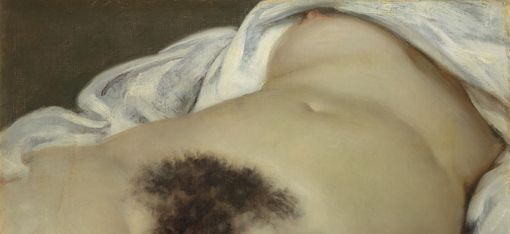
Gustave Courbet is regarded as the leading figure of Realism, boldly defying the idealising conventions of nineteenth-century art.
As a pioneer of socially engaged painting, Courbet also gained political prominence following the fall of the Second French Empire in 1870 and through his involvement in the Paris Commune of 1871. Yet Courbet was equally a dreamer. In his portraits, landscapes, and still lifes, he created a quiet, contemplative world that stood in stark contrast to the turbulent political and industrial upheavals of his time. Through his self-assured public persona, his unwavering commitment to artistic autonomy, his penchant for provocation, and his revolutionary approach to painting, he established himself as one of the great rebels of nineteenth-century art.
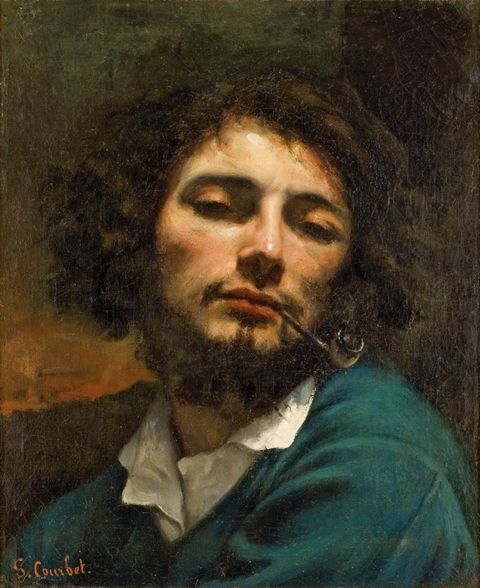
The major retrospective at the Leopold Museum is the first monographic exhibition dedicated to Courbet in Austria. Bringing together works from all phases of his career, it offers a comprehensive survey of his paintings and works on paper. The exhibition opens with Courbet's early, iconic self-portraits and traces his artistic development through his revolutionary paintings on themes ranging from social realism and the artistic bohème to his sensuous female nudes. Further highlights include landscapes of his native Ornans region, powerful seascapes, and works from his years in Swiss exile.
Programme
Public guided tours
- Every Saturday, 15:00 and every Sunday, 11:00
Curator's tour
- March 12, 16:30, with Director Hans-Peter Wipplinger
- April 9, 16:30, with Lili-Vienne Debus, Assistant Curator
- May 7, 16:30, with Lili-Vienne Debus, Assistant Curator
- June 11, 16:30, with Director Hans-Peter Wipplinger
Leopold Museum