Gala Hernández López


Key Facts
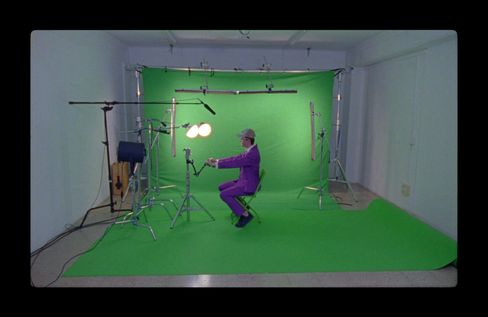
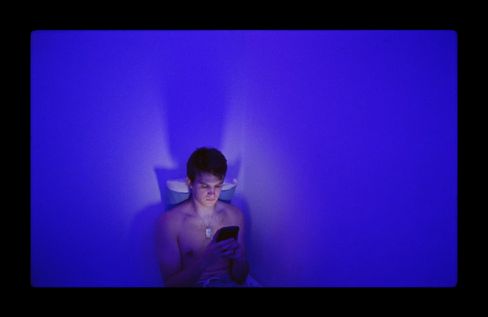
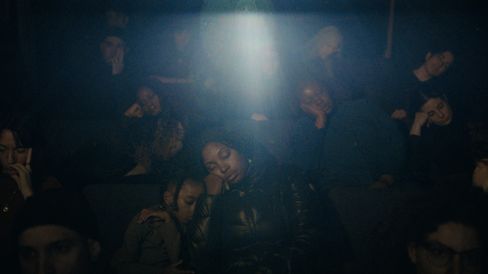
Gala Hernández López is an artist, filmmaker, researcher, and producer. Her interdisciplinary practice combines film, video installation, and writing, bringing together theoretical research and formal experimentation. Her work explores techno-social entanglements and the forms of subjectivation shaped by computational capitalism. She examines the imaginaries and narratives circulating in virtual communities, as well as the “futurabilities” generated by disruptive technologies, which she treats as shared fictions that permeate our intimacy and our collective unconscious. At the heart of her practice lies an ecofeminist sensibility that gives rise to poetic, dreamlike, and research-based works that combine materialist critique, speculative fiction, and documentary elements. Her work has been presented at international festivals and institutions such as Cannes, Berlinale, Rotterdam, IDFA, DOK Leipzig, Viennale, Cinéma du Réel, Curtas Vila do Conde, IndieLisboa, Berlinische Galerie, Palais de Tokyo, Sarajevo Film Festival, Vancouver Film Festival, Festival du Nouveau Cinéma, Camden Film Festival, Courtisane, transmediale, Kurzfilmtage Winterthur, FRAC Île-de-France, among others. Her film La Mécanique des fluides won the César for Best Documentary Short Film in 2024. She regularly gives workshops, lectures, and talks at venues such as Beaux-Arts de Marseille, Freïe Universität, Kunsthochschule Kassel, Filmuniversität Babelsberg Konrad Wolf, Beaux-Arts de Paris, The Photographers Gallery, Locarno Film Festival, Harvard University, Goldsmiths University of London, University of British Columbia and University of Michigan.
Project Info
During her residency, she will work on the screenwriting of MAGNETIC ANIMALS, her first feature fiction film.
SYNOPSIS: Berlin, 2040. Hedda, a zoologist specializing in bats, lives alone under the growing pressure of a pro-natalist regime. Summoned to explain why she is not yet a mother, she finds herself caught up in a medical and bureaucratic process that forces her to confront her fear of motherhood, the fragile bond that ties her to her own mother, and the violence of a society that views procreation as a duty.France, 1786. Berthe, a young aristocrat with the same birthmark as Hedda, is confined to a castle and subjected to treatments using animal magnetism intended to cure her infertility. When Madeleine, a pregnant Black woman from Saint-Domingue, is brought to the estate, Berthe’s fate becomes intertwined with hers in a world ruled by patriarchal and colonial domination. What secret legacy binds Hedda and Berthe across time?