Boris Hegenbart

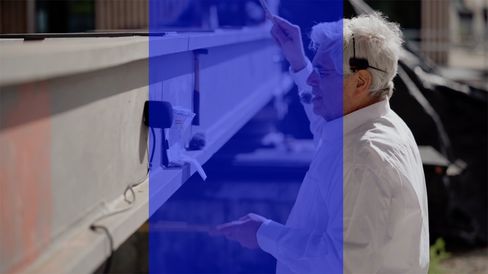
Key Facts
Boris Hegenbart is a Berlin composer and artist since 1996. Hegenbart’s works include sound installations, electro-acoustic concerts and computer performances, compositions for solo instruments, chamber ensembles, theatre, media-art, dance and experimental video works.
In his electro-acoustic compositions, Hegenbart combines the aesthetics of 1950’s musique concrete with our day’s digital technologies of music production and sound synthesis, without restricting himself by software limitations. For him, this software, as well as music-samples and sounds of his everyday life, become material to be molded according to his artistic intentions.
This way Hegenbart creates the delicate and complex sound-scapes, for which he is being admired.
Project Info
In “Rotaphonie,” self-rotating sound objects move within the space defined by the TONSPUR_passage | Micro Museum for Sound. The composer and artist Boris Hegenbart describes this situation as an autonomously operating infrastructure in which sounds, like industrial objects in an assembly hall, move back and forth, accelerate and decelerate, occasionally come to a standstill, and allow other objects to pass.In doing so, Hegenbart posits sounds and movements as functional within a context unknown to the listeners; the artist communicates meaningfulness without revealing the meaning. The installation is therefore not addressed to a recipient. It exists in the same way as the architectural situation it occupies: as a continuous present that does not require a viewer. (One might think of the trees in the park in George Berkeley’s “A Treatise Concerning the Principles of Human Knowledge” (1734, §23), which exist independently of whether anyone perceives them.)