House of the Tree
Johannes Franz-Figeac
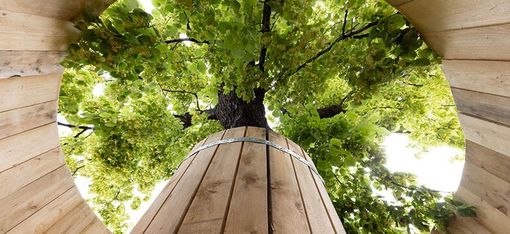
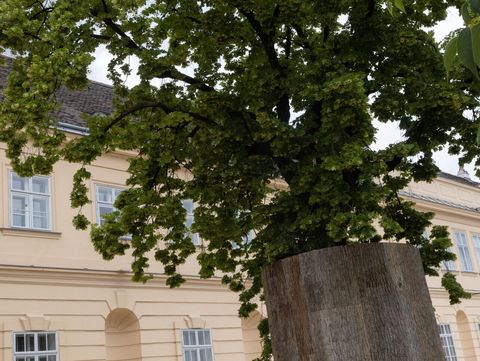
In collaboration with the Academy of Fine Arts and Austrian Federal Forests AG, Johannes Franz-Figeac has created a walk-in art installation that explores the tense relationship between humans and nature and the importance of the forest in the age of climate change. In addition to offering visitors a space for personal reflection on the theme of the forest, the “House of the Tree” serves as a place of retreat.
Asymmetrically connected
The tree is a place of human longing.
A treehouse promises a sheltered retreat and thus embodies the contradictions inherent in our relationship with nature.
Longing is one-sided. Love is unrequited.
Trees store—along with CO2—events and encounters in their wood.
It is what it is: a partnership of convenience driven by one-sided interests, where excessive sentimentality does more harm than good.
Rethinking the LandscapeIn
A central and symbolically significant square in Vienna, the artistic concept addresses this human contradiction regarding nature, thereby creating a paradoxical intervention in the public urban space.
Facts
1. Each tree stores approximately 1.2 tons of CO2.
2. Annual per capita CO2 emissions in Austria amount to 9 tons.
3. Carbon remains in the wood even after it has been processed.
4. This linden tree has already produced approximately 4,500 kg of oxygen.
5. Trees act as a natural air conditioner.
6. In summer, it can be 6 degrees cooler in the forest than in the city.
7. With 10 percent more green spaces, the rise in temperature in cities could be reduced to one degree over the next 70 years.
8. Every second, one cubic meter of wood regrows in Austria.
9. Due to their less-than-ideal environment, urban trees have a lifespan of only 40–50 years.
10. Half of the city of Vienna is covered by green spaces and water.
11. There are 8.3 million trees in the city of Vienna.
12. 93,000 trees in Vienna line the streets.
“Forest of the Future“ – A Message from Austrian Federal Forests
Extreme weather events are on the rise, and drought and heat are leading to the spread of bark beetles. Forests are under pressure due to climate change and play a vital role: they absorb the greenhouse gas CO2.
People need forests. Only through active, sustainable forest management can forests meet all these needs and rise to the future social and ecological challenges.
Nature conservation and land use go hand in hand in this context.
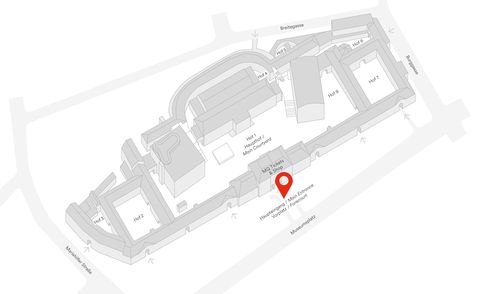
MQ Forecourt