Selbi Jumayeva


Key Facts
Selbi Jumayeva (Ashgabat, 1986) is a transdisciplinary researcher, curator, and artist who works with documentary photography, ethnography, and applied ecology. Her research focuses on future issues in desert regions, socio-ecological systems, and planetary boundaries. Jumayeva is currently developing cultural and natural heritage programs for environmental, biodiversity conservation, and climate adaptation work in Turkmenistan. Previously, she led the environmental and social strategy at the Artcom Platform in Kazakhstan.
As an expert on Central Asia, Selbi Jumayeva has over 25 years of experience in strengthening regional civil societies, leading and promoting grassroots initiatives, and advising international organizations. As a curator and artist, she explores multispecies relationships and traditional ecological knowledge, preserves the narratives and artifacts of her Yomud tribal lineage, and documents everyday life in Central Asia and the history of Turkmen ideas.
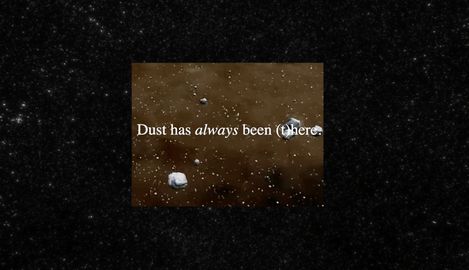
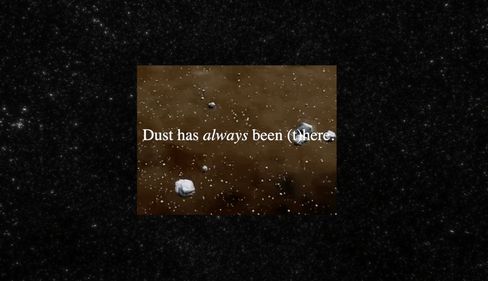
She integrates her insights and concepts on cross-border "boundary objects" and planetary human interdependencies into ongoing collaborative projects such as "Dusts" (The Terraforming, 2021) and "Steppe Synanthropies: Extant Across Borders" (Climate Dignity, 2025).
Project Info
During her residency at MQ, Selbi Jumayeva is working on her project "Steppe Synanthropies: Data Tapestry." This project continues her exploration of experiences of connectedness and embeddedness of local and intimate ecosystems in planetary processes. The aim is to raise awareness of the importance of protecting endangered species while honoring narratives of loss and farewell through artistic expression and scientific investigation.
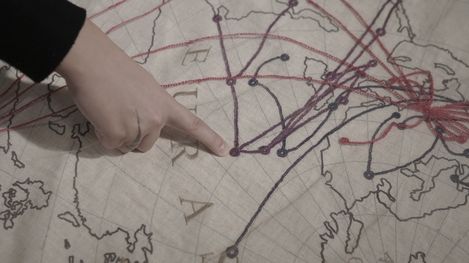
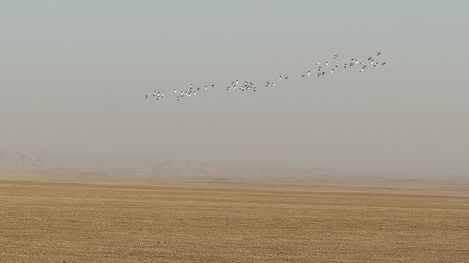
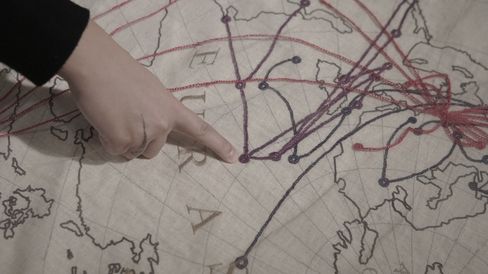
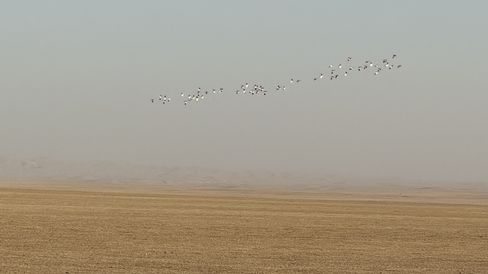
At the same time, the project follows the mission of the collaborative work "Steppe Synanthropies: Extant Across Continents," which highlights the coexistence of migratory bird species, scientists, and herders along the African-Eurasian migration route. "Data Tapestry" uses traditional Turkmen art forms and techniques such as jewelry making, embroidery, and patchwork to create elaborate and detailed textile works that cover, protect, warm, and adorn people and domesticated animals.Such handmade, mobile, and functional garments and technologies are adaptive necessities that have emerged from the transhumant lifestyles of Central Asia in harsh environments and extreme weather conditions. These carefully designed and assembled tapestries are sewn together, embroidered, and imbued with dense data artifacts that document and honor everyday realities, livelihoods, and ways of life.
Steppe Synanthropies: Data Tapestry builds on the practical insights gained from the Extant Across Continents project to tell the stories of local scientists working in the field of biodiversity conservation—people who often remain invisible but are always at the forefront of ecological responsibility.