Ralph Tharayil




Key Facts
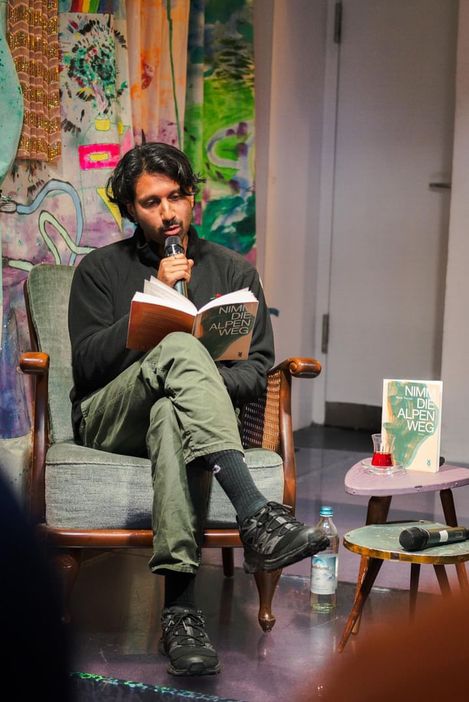
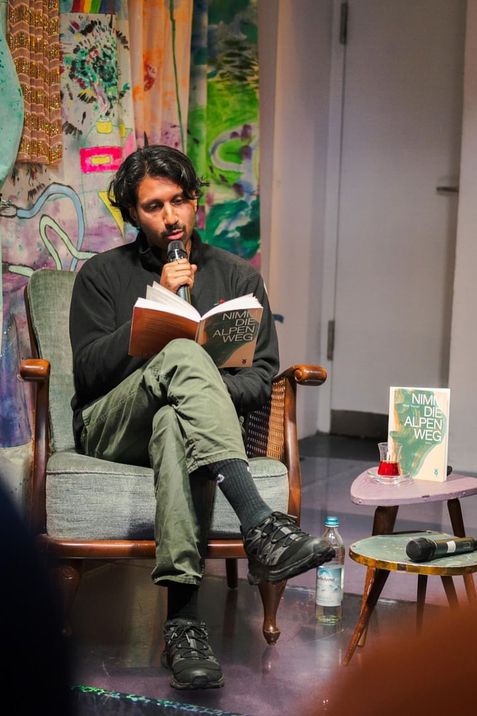
Ralph Tharayil was born in Switzerland in 1986 as the son of South Indian migrants who belong to a Christian, Syrian Orthodox minority in India. He studied history, media and literature in Basel. During this time, he worked as a journalist, theatre maker, musician and pizza courier. After working in New York and Hamburg, he now develops concepts and texts for performances, also in collaborations, writes prose and poetry and leads literary writing workshops. In February 2023, Voland & Quist published his literary debut "Nimm die Alpen weg", for which he was awarded the Alfred Döblin Medal. His translation of the poetry collection "Jesus Thesis and Other Critical Fabulations" by South African poet:in Kopano Maroga was published by Akono Verlag in September 2023.In his work, Ralph Tharayil works in the fields of literature, audio and performance, where he explores the relationship between body and language in the context of transcultural trauma.
Project Info
In his work, Ralph Tharayil explores the fields of literature, audio, and performance, examining the relationship between the body and language in the context of transcultural trauma. During his residency in Vienna, he will work on his current writing project, Heimweh und Verbrechen, in which he explores the feeling of homesickness through a literary and essayistic search for clues—a pathology coined in Basel under the term “nostalgia” and popularized from the 17th century onward as a “Swiss disease.”