Bogdana Kosmina
Key Facts
Bogdana (Dana) Kosmina – Born in 1990 in Kyiv. In 2013 graduated from the Kyiv National Academy of Fine Arts and Architecture. From 2015–Master of Architecture ENSA Nantes.
Kosmina is an artist, architect and curator living and working between CDMX, Berlin and Kyiv. Co-founder of the Pylorama open collective for urban interventions.
In 2017 entered HUDRADA (Artistic committee) curatorial and activist group. Since 2017 started her own multidisciplinary practice to change the perspectives of public spaces architecture.
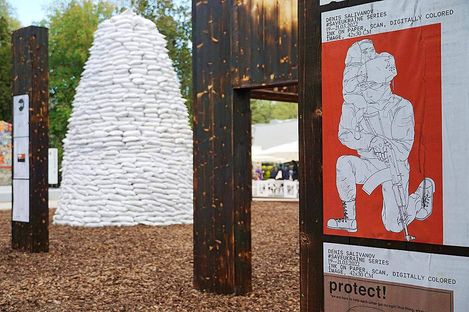
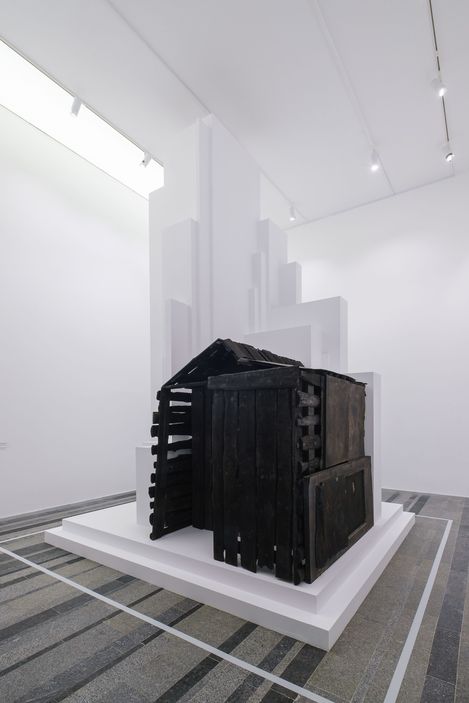
Significant realized projects by Kosmina are: representation of the Ukrainian pavilion by in-situ installation “Piazza Ucrania” in Giardini at 59th Venice Biennale, renovation of “Dovzhenko Center” the largest Ukrainian State Film Archive, collaborations with electronic music scene on public space design such as Closer, Brave Factory, Rhythm Buro, Bassiani. From 2018 cooperate with the urban collective METASITU is devoted to the exploration of new spatial pedagogies.
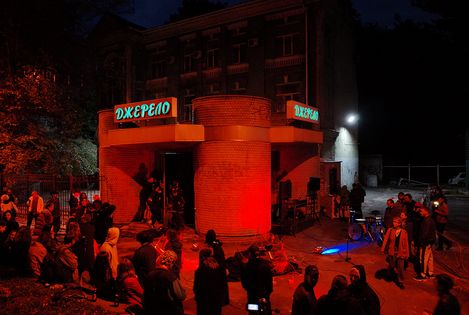
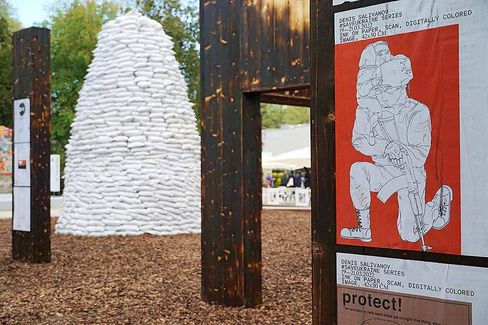
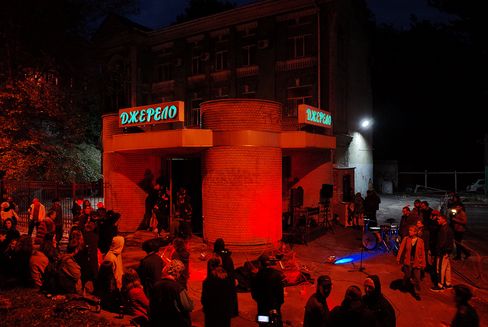
From 2019 is a co-founder and curator of a self-organized exhibition space in a formal postmodernist pavilion “Dzherelo” (The Source) in Kyiv, dedicated to urban transformations by video-art, performance & experimental music. In 2020 represented “The hotel, the sanatorium, the pension and their refugee’s rooms” in the Tbilisi Architecture Biennial “What Do We Have In Common”. At the 18th International Architecture Exhibition “Before the Future” Kosmina represent the group project “March on”.
Project Info
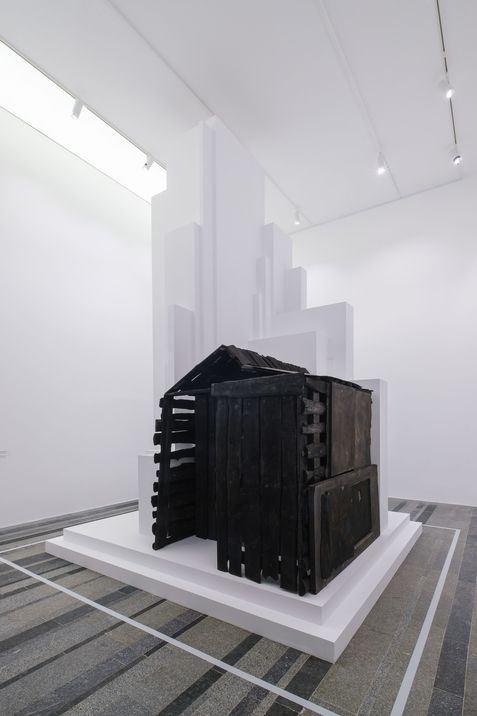
Today, living in the constant war devastation, I want to project myself into the future of caring and rebalancing attitude to the cultural heritage. “The Atlas of Traditional Housing from the middle of the 19th to the beginning of the 20th century” is a project that was supposed to be jointly implemented with 3 academies of sciences from Ukraine, Moldova and Belarus in the 1960s. Whereas in the 1990s there was a huge effort to continue the Ukrainian section led by historian, ethnographer, anthropologist Tamara Kosmina and the academic team. The publishing of Atlas was finally abandoned by Rylsky Institute of Art Studies, Folklore and Ethnology in Kyiv due to its colossal scale. The Atlas consists of series digital maps, texts and a visual block: axonometries, watercolours and photos of buildings interiors and exteriors. Each of the thematic map and visual representation has 3-time gradations: the middle and end of the 19th century and the beginning and middle of the 20th century. Overall, the project has been going on for over 50 years, its first presentation to the public will be attend at MuseumsQuartier Vienna 2024. Atlas is the message from the constructions that were passed down from generation to generation about their infinite source of freedom.